


Top 10 TTlock Smart Lock Suppliers for Global Buyers
The global smart lock market is expanding, but purchasing decisions remain complicated. Fortune Business Insights valued the market at about USD 2.49 billion in 2023 and projected strong growth through 2032. MarketsandMarkets also identified rising demand for connected access, mobile credentials, and property-management systems. These figures show opportunity, not certainty. Forecasts differ because market definitions, regions, and product categories are not always consistent.
This guide examines the Top 10 TTlock Smart Lock Suppliers for Global Buyers through practical purchasing criteria. We consider manufacturing experience, firmware stability, API support, battery performance, gateway compatibility, certifications, warranty policies, and after-sales response. A lock may look excellent in a product photo. Yet a weak cloud connection can delay access at a hotel entrance. A missing local certificate can also stop a promising order. Small details matter.
Lee Odess, a recognized smart-access strategist, has said, “The smart lock is the gateway to the smart home.” That description fits TTLock’s growing role in apartments, hotels, offices, and rental properties. However, the gateway is not automatically secure or reliable. Suppliers must prove their claims with test records, update policies, transparent documentation, and real customer references. Some rankings may still miss regional service quality, which deserves closer review. Our selection therefore favors evidence over attractive specifications, while acknowledging that no supplier performs equally well in every market.
What TTLock Smart Locks Are and How the Ecosystem Works
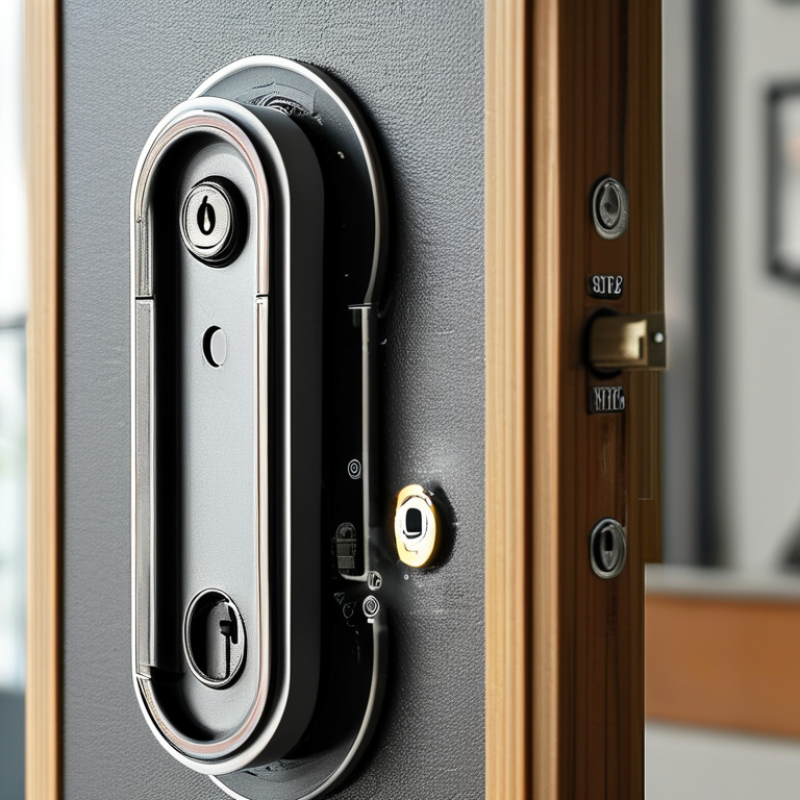
TTLock smart locks are electronic access devices managed through a mobile application. They commonly support Bluetooth unlocking, temporary passwords, access cards, and fingerprints. Available functions depend on the lock model.
The ecosystem has three practical layers. The lock stores access permissions and records entry events. The mobile app creates users, schedules codes, and checks activity logs. A gateway can connect the lock to the internet for remote management. Without a gateway, many operations require the phone to stay within Bluetooth range.
In supplier evaluations, I check battery access, emergency power options, and mechanical key quality. These details matter during a late-night battery failure. I also test temporary codes with different time zones and phone systems. Small errors appear easily. Some locks lose remote features when the gateway is poorly positioned. Others need repeated calibration after installation. The system can be capable, but it is not entirely automatic. Buyers should confirm API access, software language, firmware support, and data-handling practices before placing large orders. A clear installation guide is equally important, especially for doors with unusual thickness or misaligned strike plates.
| Rank | Anonymous Supplier Profile | Primary Lock Formats | Core Communication | Typical Access Methods | Remote-Access Requirement | Management Functions | Best-Fit Buyer Segment | Key Verification Points |
|---|---|---|---|---|---|---|---|---|
| 1 | Supplier Profile 01 Full ecosystem support | Deadbolt, lever, hotel lock, padlock | Bluetooth Low Energy; optional Wi-Fi gateway | Mobile app, PIN code, RFID card, fingerprint where supported, mechanical key | Gateway required for off-site control | Temporary and recurring PINs, eKeys, user roles, audit records, battery alerts | Property managers and multi-site operators | Confirm app compatibility, gateway limits, API availability, and firmware-update process |
| 2 | Supplier Profile 02 Hospitality focused | Hotel mortise, tubular, cylindrical, energy-saving locks | Bluetooth Low Energy; gateway or hotel-management integration | Mobile key, PIN code, RFID card, emergency key | Gateway or connected management system for remote events | Room assignment, validity periods, staff permissions, entry history | Hotels, serviced apartments, and guest accommodation | Check door-thickness range, mortise dimensions, card standard, and emergency-opening procedure |
| 3 | Supplier Profile 03 Residential portfolio | Deadbolt, rim lock, lever handle, cylinder | Bluetooth Low Energy; optional wireless gateway | App, passcode, fingerprint on selected models, key override | Gateway needed for remote unlock, monitoring, and notifications | Family accounts, scheduled access, passage mode, access-log review | Homes, apartments, and small landlords | Verify local door compatibility, indoor thumb-turn clearance, battery type, and installation method |
| 4 | Supplier Profile 04 Commercial access | Lever, mortise, glass-door, cabinet, and gate solutions | Bluetooth Low Energy; gateway for networked sites | Mobile credentials, PINs, RFID cards, fingerprints on selected units | Gateway recommended for centralized administration | Department permissions, time zones, event logs, bulk user management | Offices, retail sites, clinics, and warehouses | Request anti-panic requirements, fire-door suitability, ingress protection, and administrator controls |
| 5 | Supplier Profile 05 Outdoor and utility | Padlocks, gate locks, cabinet locks, outdoor cylinders | Bluetooth Low Energy; gateway-dependent remote operation | App, PIN, RFID card, fingerprint on selected products, key override | Gateway required for centralized remote management | Time-limited access, shared credentials, activity logs, low-battery warnings | Storage units, construction sites, utility rooms, and gates | Check weather resistance, corrosion protection, shackle clearance, and operating-temperature range |
| 6 | Supplier Profile 06 Access-control integrator | Mortise, lever, cylinder, cabinet, and elevator-related access points | Bluetooth Low Energy, gateway, web console, and documented API where available | Mobile app, PIN, RFID, fingerprint, and integrated credentials | Gateway and cloud or local network architecture | Multi-property administration, role-based access, API workflows, reporting | System integrators and enterprise buyers | Validate API scope, webhook support, data hosting, rate limits, and integration testing resources |
| 7 | Supplier Profile 07 Rental operations | Deadbolt, lever, cylinder, and keypad-enabled locks | Bluetooth Low Energy; Wi-Fi gateway for remote service | Temporary PIN, mobile eKey, recurring code, owner override | Gateway needed for remote code creation, deletion, and status checks | Check-in scheduling, cleaner access, expiration rules, audit trails | Short-term rentals and vacation properties | Confirm timezone handling, offline-code behavior, battery reporting, and guest-support workflow |
| 8 | Supplier Profile 08 OEM and customization | Deadbolt, lever, mortise, cabinet, and specialty housings | Bluetooth Low Energy; optional gateway and software customization | App, PIN, RFID, fingerprint on supported hardware, mechanical backup | Depends on the selected hardware and management architecture | Packaging customization, firmware configuration, private-label app options where permitted | Distributors and project-specific procurement | Confirm certification ownership, tooling charges, minimum order quantity, lead time, and warranty terms |
| 9 | Supplier Profile 09 Budget-volume supply | Basic deadbolt, lever, cabinet lock, and padlock | Bluetooth Low Energy; gateway available on selected models | Mobile app, PIN, RFID card, mechanical key | Usually required for remote administration | Basic user management, temporary credentials, access history, battery alerts | Residential distributors and standardized projects | Compare total landed cost, replacement parts, packaging quality, app support, and failure-rate records |
| 10 | Supplier Profile 10 Specialty access | Glass-door, sliding-door, cabinet, safe, and narrow-profile locks | Bluetooth Low Energy; gateway subject to product design | Mobile app, PIN, RFID, fingerprint on selected models, emergency key | Gateway required when remote monitoring is supported | Credential scheduling, access logs, administrator assignment, battery status | Furniture, interior partitions, display units, and special installations | Check mounting geometry, load limits, glass or panel thickness, emergency release, and replacement availability |