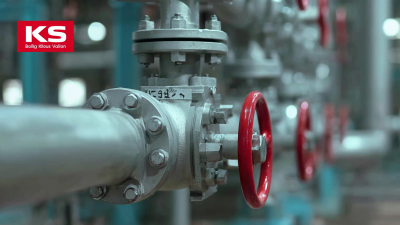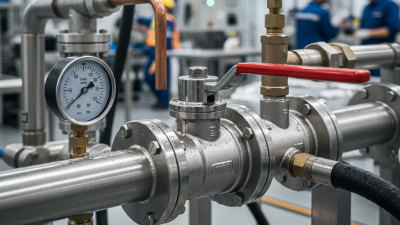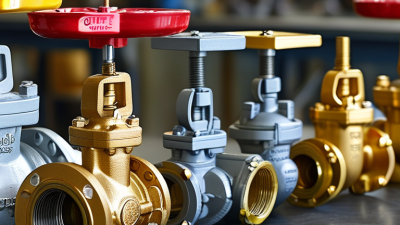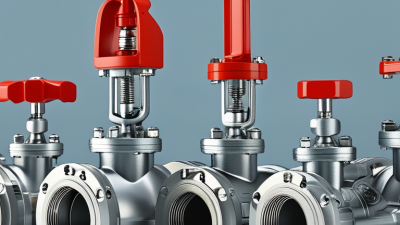
China Top Ball Valve Manufacturers How to Choose?

China’s ball valve manufacturing sector has become a serious sourcing option for oil and gas, chemical processing, water treatment, and energy projects. Grand View Research estimates that the global industrial valves market will continue expanding through 2030, driven by pipeline upgrades, process automation, and stricter flow-control requirements. Fortune Business Insights also identifies rising demand for automated valves and corrosion-resistant materials.

The numbers look attractive. The decision is not simple.

A lower quotation may hide thinner walls, weaker seals, or incomplete testing records. A strong manufacturer should provide pressure-test reports, material certificates, traceability documents, and clear delivery controls. ISO 9001 certification helps, but it cannot replace factory audits or sample testing. API 6D compliance may be essential for pipeline applications. Different projects require different evidence.

As valve engineer Richard W. Greene once noted, “A valve is only as good as its application.” That principle matters when comparing China’s top Ball Valve manufacturers. A stainless-steel floating valve may suit clean water, while a trunnion-mounted design may better handle large pipelines and high pressures. Temperature, media composition, pressure class, actuation, and maintenance access must guide the selection.

Many buyers focus too heavily on price. That is a weakness.

Factory experience, machining accuracy, coating quality, and after-sales response deserve equal attention. Some suppliers present impressive websites but limited production depth. Others offer fewer marketing claims and stronger inspection records. This article examines how to compare Chinese Ball Valve manufacturers through technical capability, certifications, quality control, customization, export experience, and total lifecycle cost.
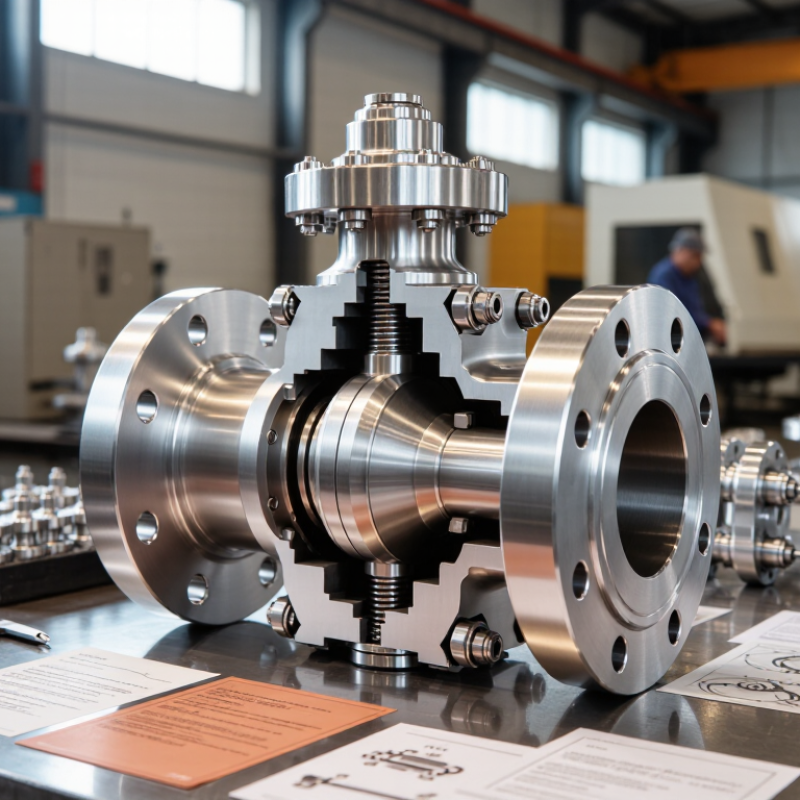
China Top Ball Valve Manufacturers How to Choose?

Classify Chinese Ball Valve Types, Materials, and API 6D Applications

China Top Ball Valve Manufacturers: How to Choose?

China’s ball valve sector serves pipelines, LNG terminals, chemical plants, and water systems. Grand View Research valued the global industrial valves market at about USD 77.9 billion in 2023. It also forecasts steady growth through 2030. This demand makes classification essential.

Floating ball valves suit moderate pressures and smaller diameters.

Trunnion-mounted valves handle larger pipelines and higher operating forces.

Full-bore designs reduce pressure loss.

Reduced-bore models can lower cost and weight.

Material selection must follow the medium, temperature, pressure, and corrosion risk. Carbon steel, such as WCB, fits many oil and gas services. Stainless steel, including CF8M, performs better with moisture and selected chemicals. Duplex stainless steel offers stronger resistance in chloride environments. Nickel alloys may be necessary for severe corrosion.

Do not choose materials from a catalog alone. Actual fluid analysis matters.

For API 6D applications, request documented design compliance and traceability. Check pressure-test records, material certificates, welding procedures, and non-destructive examination results. API 6D pipeline valves commonly require reliable sealing, fire-safe design, and controlled manufacturing.

MarketsandMarkets projects the global ball valve market to reach approximately USD 14.4 billion by 2028. That growth may encourage rushed inspections. A factory audit should examine machining, assembly cleanliness, coating control, and final testing.

Ask for witnessed tests when the pipeline is critical.

Small details matter.

Personally, I would treat unclear certificates as a warning, even when the quoted price looks attractive.

Compare ASME B16.34 Pressure Classes 150–2500 and Temperature Limits

China Top Ball Valve Manufacturers: How to Choose?

ASME B16.34 pressure classes are not simple pressure labels. Class 150 does not mean 150 psi at every temperature. Its allowable pressure depends on the valve body material, temperature, wall design, and pressure boundary construction. The same comparison applies to Classes 300, 400, 600, 900, 1500, and 2500.

Check the pressure-temperature tables carefully. For example, a carbon steel valve may carry a higher rating near 38°C, but its allowable pressure usually falls as temperature rises. At low temperatures, toughness becomes critical. Many carbon steel applications require special impact testing below about -29°C. Alloy materials can support harsher conditions, but their ratings still require verification.

Ask each manufacturer for the exact ASME B16.34 rating table, material certificates, design calculations, and hydrostatic test records. Match the valve class with the system’s maximum pressure and operating temperature, not its normal average. A Class 600 valve may be unsuitable if its rating declines sharply at elevated temperature. A Class 1500 valve may also be wasteful for a mild service line.

The shortcut is tempting. It can fail. I would also review end connections, ball and seat materials, fire-safe design, and repeated cycling performance. One overlooked detail is the shutoff temperature, which may differ from the pipeline temperature. Supplier data should explain that difference clearly, or the selection remains incomplete.

Verify ISO 5208 Rate A and API 598 Leakage-Test Performance

China Top Ball Valve Manufacturers: How to Choose?

Verify ISO 5208 Rate A and API 598 Leakage-Test Performance

Choosing among China’s top ball valve manufacturers requires more than machining photos or low quotations. Verify ISO 5208 Rate A and API 598 leakage-test performance before comparing prices. Ask for the valve size, pressure class, test medium, test pressure, and holding time. These details show whether the certificate matches your purchase.

Small details matter.

For ISO 5208 Rate A, inspect the stated acceptance criterion and test direction. The report should identify the valve, serial number, seat material, and calibrated instruments. “Zero visible leakage” must not replace a defined method. For gas testing, bubble observation needs controlled conditions and a recorded duration. Request calibration dates, not vague assurances. A test report without traceability is weak evidence.

API 598 verification needs equal care. Confirm shell, backseat where applicable, and closure tests are listed separately. Compare pressure and duration with the applicable valve design and purchasing specification. Do not assume API 598 and ISO 5208 Rate A are interchangeable. They may use different criteria.

I have seen buyers accept clean paperwork while overlooking an unrecorded test medium. That mistake is easy to repeat. Ask for a witnessed test or independent inspection when service is critical. Recheck the serial number on the valve body, nameplate, packing list, and report.

Match ISO 5211 Actuator Interfaces with Torque and Valve Size

China Top Ball Valve Manufacturers: How to Choose?

Match ISO 5211 Actuator Interfaces with Torque and Valve Size

Choosing a ball valve manufacturer requires more than comparing prices or catalog dimensions. The ISO 5211 interface defines the actuator mounting pattern, flange size, and drive connection. It does not define the actuator torque. A correct match begins with the valve’s breakaway, running, and closing torque under actual pressure and temperature.

Valve size is only a starting point. A large valve may need less torque than a smaller valve with high pressure, abrasive media, or hardened seats. Ask for tested torque data, not a convenient estimate. Then add a sensible safety margin without making the actuator unnecessarily large. Oversizing can reduce control accuracy and increase stem stress.

Check the ISO 5211 flange, bolt pattern, drive square, and shaft alignment together. Small mounting errors can create serious installation problems. Confirm whether the valve uses direct mounting or a bracket and coupling. Request pressure-test records, material certificates, dimensional drawings, and traceable inspection reports from the manufacturer. These documents reveal more than polished photographs.

A neat spreadsheet can still mislead. I have seen selections based only on DN size and nominal pressure. They looked correct, yet the actuator stalled during startup. Recheck torque at the coldest expected condition. Also question unclear data. Reliable suppliers should explain assumptions, test methods, and manufacturing tolerances without avoiding difficult details.

Audit ISO 9001 Systems, MTR Traceability, and Factory Test Records

China Top Ball Valve Manufacturers: How to Choose?

A reliable ball valve manufacturer should provide more than a polished catalog. Audit the ISO 9001 system and confirm how it controls purchasing, machining, inspection, and nonconforming products. Ask to see current procedures, internal audit reports, calibration records, and corrective-action evidence. Certificates alone are not enough.

Material traceability must continue from raw steel to the finished valve. Check whether each body, stem, and ball carries a heat number or unique identification. Match these details with the MTR, preferably an EN 10204 3.1 report. The chemical composition, mechanical properties, material grade, and supplier information should agree.

A missing link is a real warning. It may be a simple filing error, but it deserves investigation.

Factory test records should include pressure, seat leakage, shell testing, and test-medium details. Review the actual pressure, holding time, acceptance criteria, gauge number, and calibration date. Records should match the valve serial number, size, pressure class, and drawing revision. Do not accept only a blank template. Ask for a completed sample from recent production.

Tips: Request a live video audit of the inspection area. Select several serial numbers and trace them backward. Compare records with the nameplate. Small inconsistencies matter. I have seen attractive documentation hide weak record control, so independent inspection remains valuable when the service is critical. Overlooking this step can become an expensive lesson.